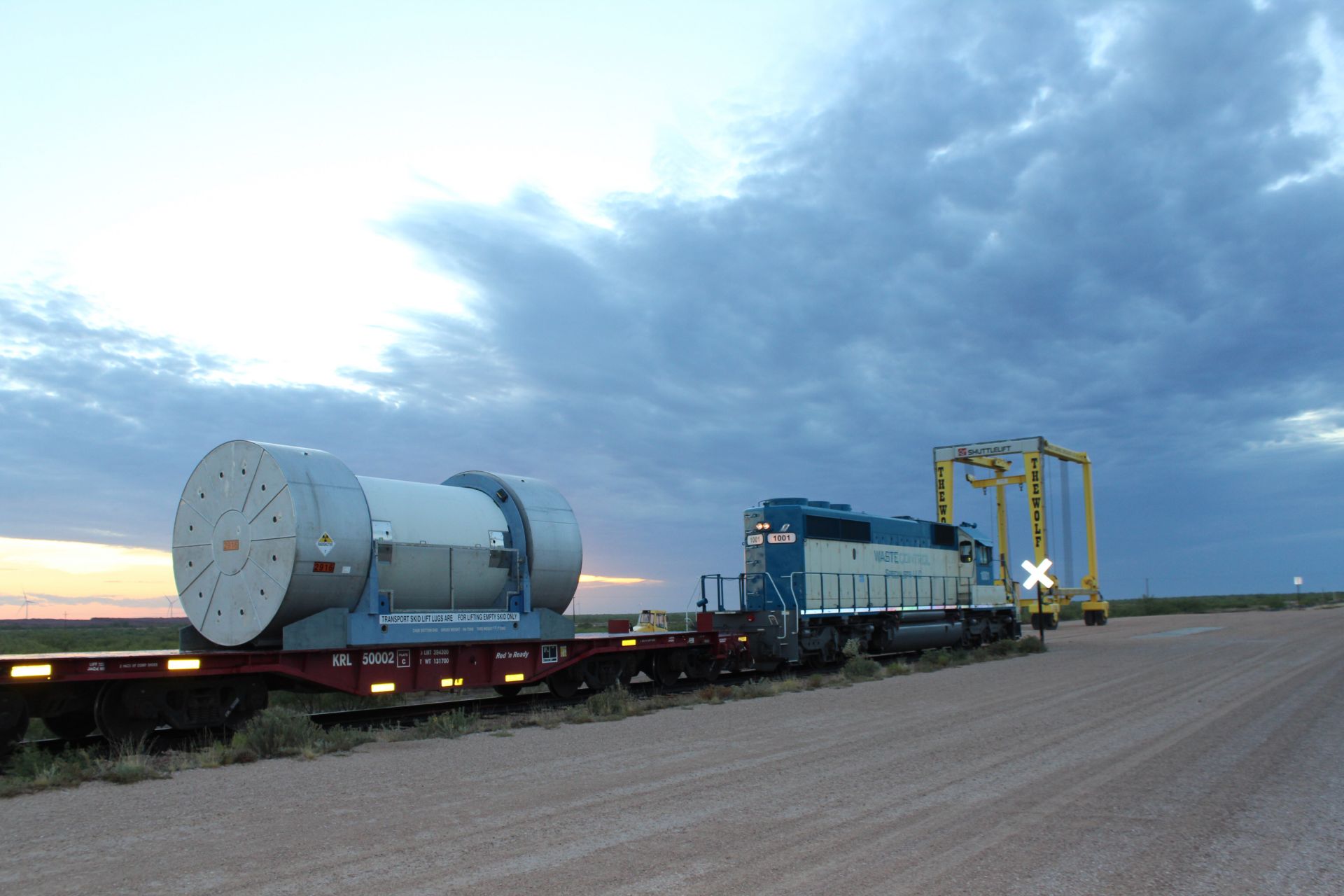
April 7, 2026, 9:27AMRadwaste SolutionsSven Bader, Brad Crotts, Michael Smith, Don McGee, and John McEntire An Orano MP197HB transport cask loaded onto a railcar.
With the significant advances in additive manufacturing (AM), otherwise known as 3D printing, Orano Federal Services and the University of North Carolina at Charlotte recently re-examined the capabilities to print impact limiters for transportation casks used to ship spent nuclear fuel. Impact limiters protect transportation casks (sometimes also referred to as transportation overpacks) and their contents during an accident. Impact limiter designs must withstand testing based on a certain significance level of hypothetical accidents, including drops, crushing, fires, and immersion in water.
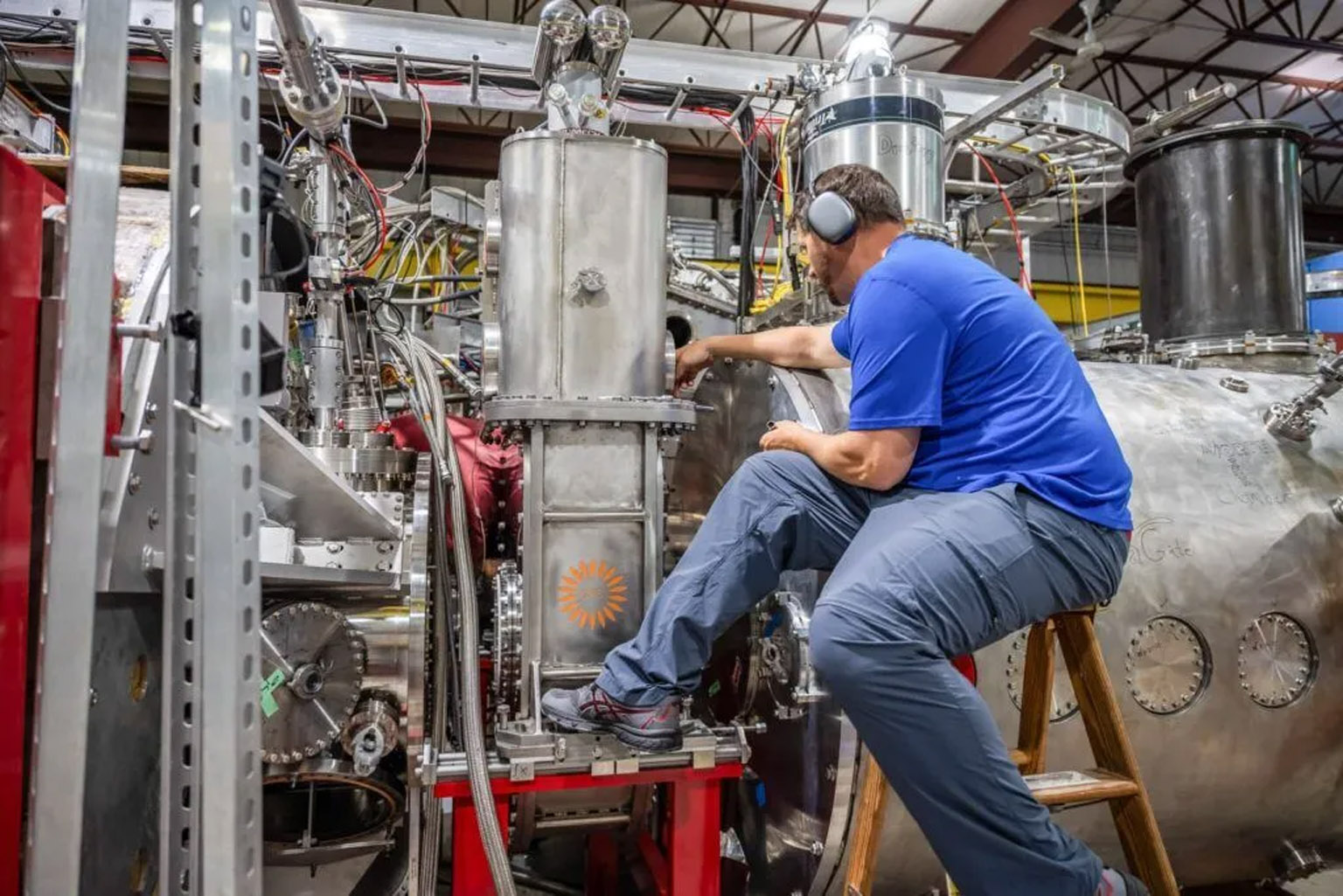
A technician works on the WHAM magnetic mirror fusion machine that uses magnets supplied by CFS. (Photo: Commonwealth Fusion Systems)
Last Thursday, Realta Fusion and Commonwealth Fusion Systems formalized a multiyear relationship with the announcement of a strategic partnership centered on CFS’s high-temperature superconducting (HTS) magnets.
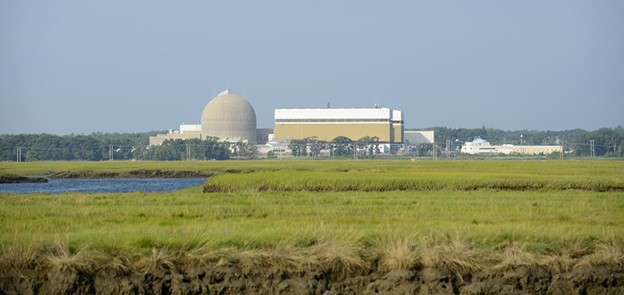
The Seabrook nuclear power plant in New Hampshire. (Photo: NextEra Energy)
Millstone’s two pressurized water reactors in Waterford, Conn., and Seabrook’s single PWR in Seabrook, N.H., are the only power reactors in operation in the New England region, with total capacities at Millstone and Seabrook of 2,122 and 1,248 Net MWe, respectively.
The region’s governors, though, may seek to expand these numbers. The governors of Connecticut, Maine, Massachusetts, New Hampshire, Rhode Island, and Vermont issued a joint statement in support of exploring next-generation nuclear energy technologies. The bipartisan announcement also urges continued support for local nuclear facilities like Millstone and Seabrook.
Washington, D.C. — The American Nuclear Society issued the following statement:
Washington, D.C. — The American Nuclear Society (ANS) issued the following statement:
“The American Nuclear Society supports the International Atomic Energy Agency's (IAEA) calls for maximum military restraint around nuclear power plants and civilian research reactors, and for full adherence by all combatants to the IAEA's seven pillars for nuclear safety and security during armed conflict.”
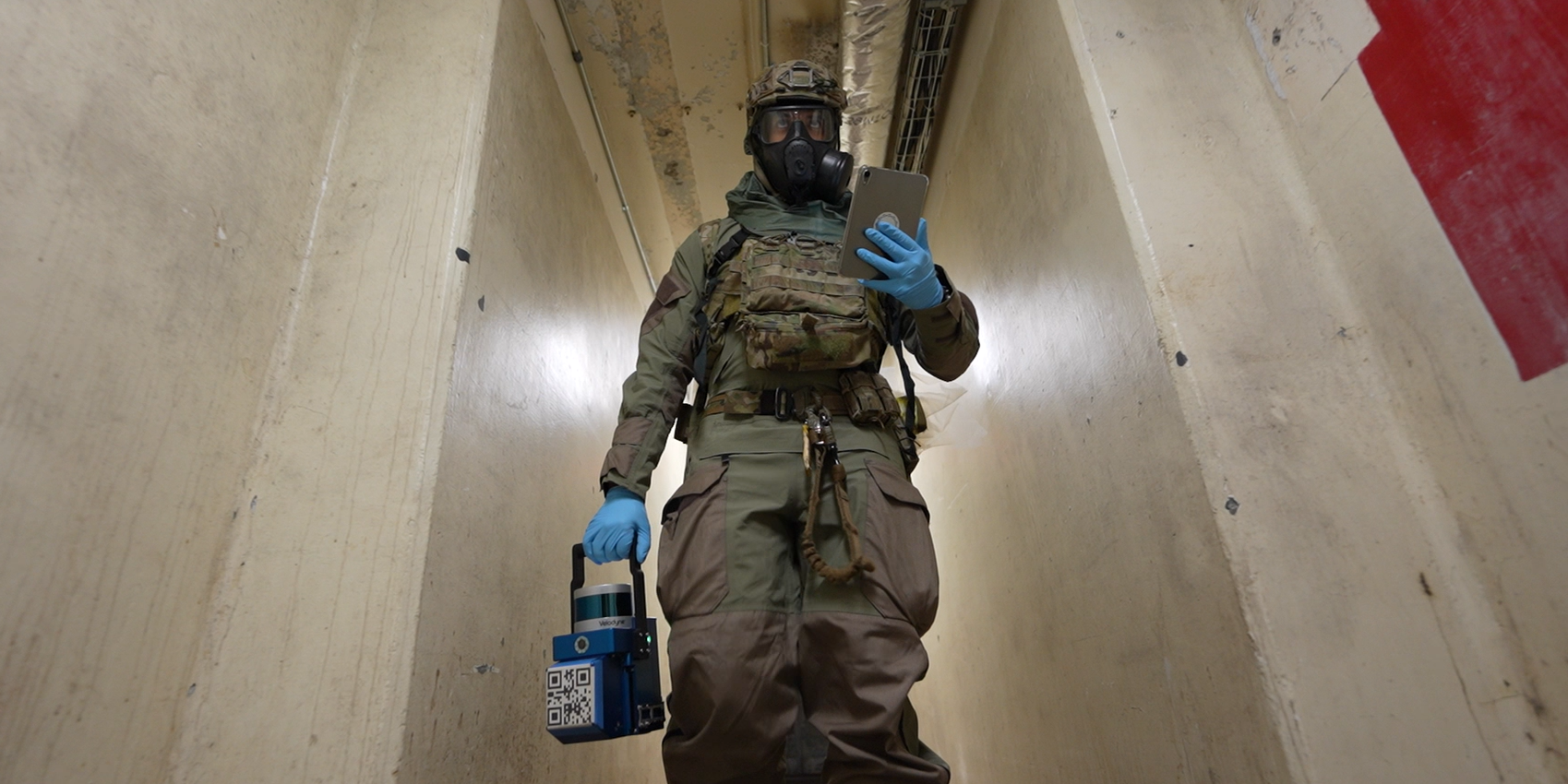
April 3, 2026, 3:01PMNuclear NewsKim Pestovich, Yuri Podpaly, and Kevin Mueller Operation of the Localization and Mapping Platform (LAMP) by Gamma Reality Inc. with a tablet readout. LAMP is one example of technology using lidar and radiation detectors to create a real-time map of the service member’s surroundings, including radiation hotspots. (Photo: DTRA)
A new, more complex nuclear age has begun. Echoing the tensions of the Cold War amid rapidly evolving nuclear and radiological threats, preparedness in the modern age is a contest of scientific innovation. The Research and Development Directorate (RD) at the Defense Threat Reduction Agency (DTRA) is charged with winning this contest.
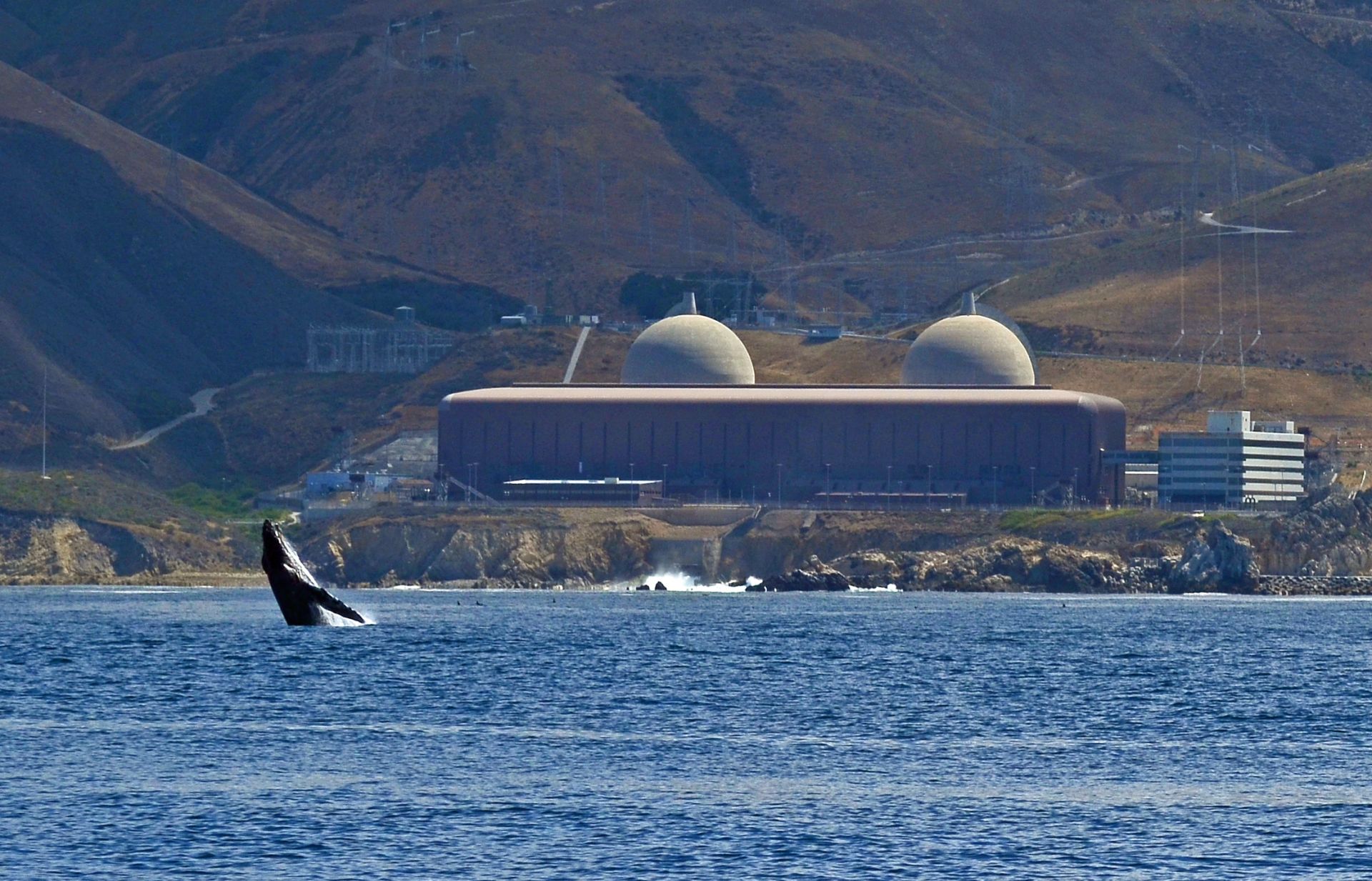
Diablo Canyon nuclear power plant in California. (Photo: PG&E)
The Nuclear Regulatory Commission has approved Pacific Gas & Electric’s application to extend the operating licenses for Diablo Canyon nuclear power plant’s two pressurized water reactors by another 20 years.
Thursday’s approval means Diablo Canyon-1 and -2 can now operate until November 2, 2044, and August 26, 2045, respectively, if California lawmakers agree. A 2022 state law requires the California Legislature to approve any extension of operations at Diablo Canyon that goes beyond 2030.
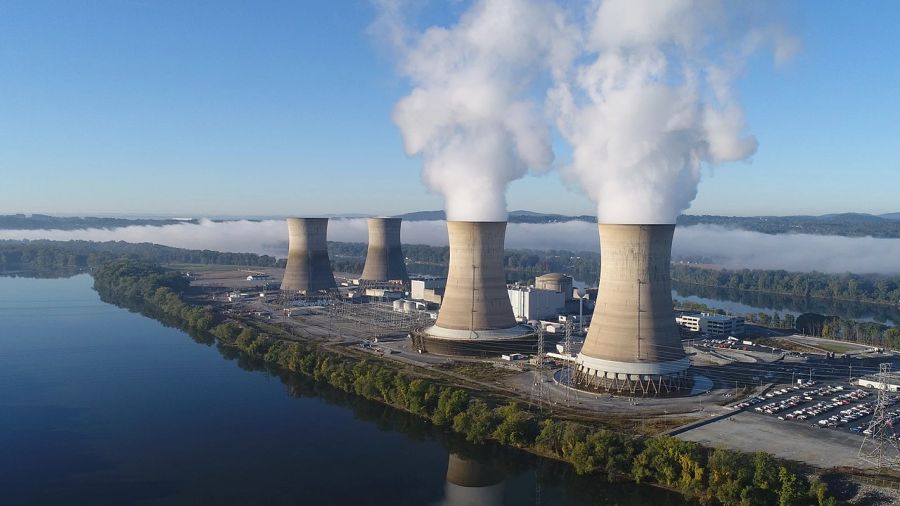
Three Mile Island nuclear power plant before its shutdown in 2019. (Photo: Constellation Energy)
When the former Three Mile Island-1 restarts in 2027 as the Crane Clean Energy Center, it will not face a delay of several years before it can be reconnected to the grid, Constellation CEO Joseph Dominguez said this week.
Among the items that emerged on Constellation and the Crane restart in Middletown, Pa., during last week’s CERAWeek energy conference was a Reuters report on an analysis from electric grid provider PJM suggesting the plant may not be connected to the grid until 2031.
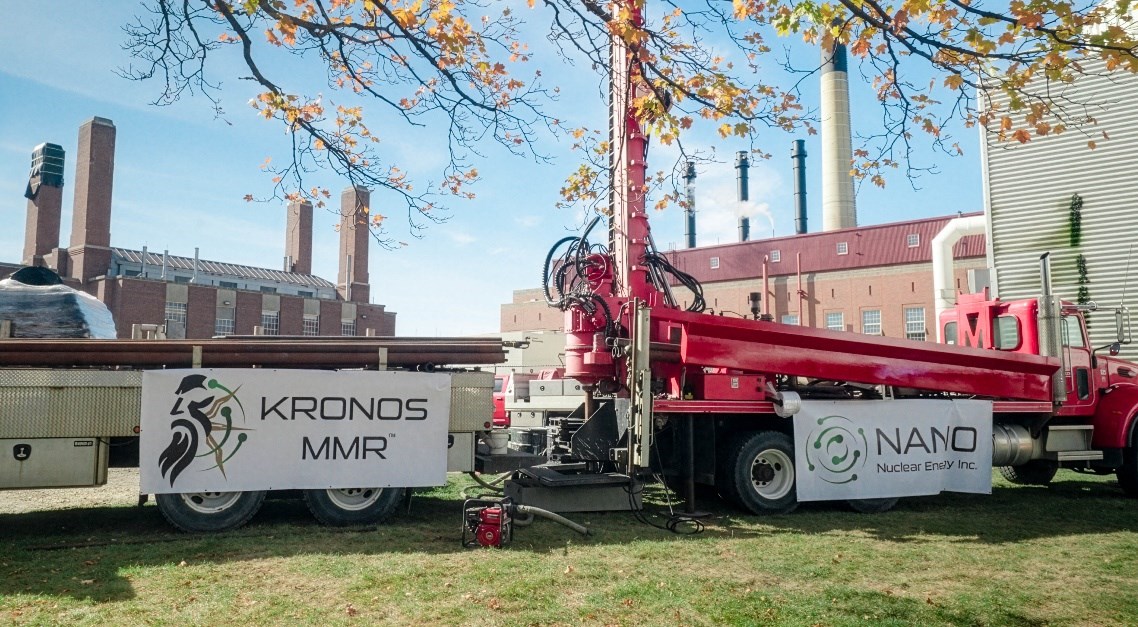
Nano Nuclear Energy has completed site-characterization for its Kronos MMR in partnership with the University of Illinois. (Photo: Nano Nuclear)
The University of Illinois–Urbana-Champaign, in partnership with Nano Nuclear Energy, has submitted a construction permit application to the Nuclear Regulatory Commission for construction of a Kronos micro modular reactor (MMR). This is the first major step in the two-part 10 CFR Part 50 licensing process for the research and test reactor and is the culmination of years of technical refinement and regulatory alignment.
The team chose to engage with the NRC in a preapplication readiness assessment, providing the agency with draft versions of the majority of the CPA’s technical content for feedback, which is expected to ensure a high-quality application.
Concept art showing the planned nuclear power plant at Lubiatowo-Kopalino. (Image: PEJ)
Polskie Elektrownie Jądrowe, Poland’s state-owned utility, has formally submitted an application for a construction license to build a nuclear power plant at the Lubiatowo-Kopalino site in Pomerania. The country’s first nuclear power plant will consist of three Westinghouse AP1000 units with a total installed capacity of 3,750 MWe. The construction and engineering contractor for the project is a U.S.-based consortium of Westinghouse and Bechtel.